Sunday, September 9, 2018

Why I will always stand for the National Anthem

Image result for patriotic quotes


So, over the past couple of years I've heard this and that about members of the NFL "taking a knee" during the National Anthem before games.  I looked into it to understand why they were doing this.  It seems there are a few different reasons but the original reason was to protest police brutality.  While I absolutely admire people for taking a stand, especially when you have so much to lose and everyone's eyes are on you, because that would be incredibly hard to do, I don't agree with their decision.  This is a very controversial topic and there are many people who disagree with it, but here is why I personally disagree.


To me, saying the pledge of allegiance and putting my hand over my heart for the National Anthem are reminders of what this country was founded on and what this country is *supposed* to be about.  Notice I said *supposed* to be, because it's not always that.  The National Anthem is about our nation's history and the sacrifices made for the people in this country and for the freedom that our ancestors dreamed of back then.  The end of the anthem says "Over the land of the free and the home of the brave".  In my opinion, the reason they are kneeling is the reason they should be proudly holding their hand over their heart.  This country is supposed to be about freedom and the pursuit of happiness for everyone.  The government is supposed to be working FOR the people, law enforcement is supposed to be protecting people and serving justice appropriately.  Is this the way it is now?  Unfortunately, no.  But that is what the country is supposed to be about.  That is what our ancestors dreamed about when they came to this country and fought in some of the bloodiest battles.  The country they fought for, they dreamed about, and they created was not the country that we have today.  But that's what the anthem is about.  The anthem is about the true spirit and meaning of this country.  That is what we stand for, that's what we show respect for.

Do I agree with Trump's decisions?  Usually no.  Do I like the current set up of our government and that it seems like the people fear the government when it should be the other way around?  No.  There are many things about the current state of our country that I'm not happy about (as I'm sure most people could say), but when I stand for the National Anthem or say the Pledge of Allegiance, I feel hope that our country can get back to its roots (in the areas it should), that we can stand together and that change is not impossible because We The People are the ones that this country was founded on.  We, the minority, we the persecuted, we the unheard, are the ones that this country was founded for.  We are the ones that our ancestors traveled so far for, gave their lives for, sacrificed everything for.  Not for what we currently are, but for what we can be.

I understand why they're doing what they're doing, but I hope they understand that to a lot of us, it doesn't signify you being ashamed of the current state of your country, it signifies that you are ashamed of the vision of this country that the founding fathers had.  The vision of freedom for all and justice for all.  We may not all be persecuted the same way and in such harsh ways, but all of us are unhappy in some way or another with the current state of our country.  That's not why we stand.  We stand for our rights, for our freedoms, and for the unity that comes with standing as a people with a voice.  We are this country.  The police are not this country.  The government is not this country.  We are.

Friday, July 20, 2018

The Other Choice


   I've been thinking about something a lot lately.  I've noticed in my own life that when faced with a stressful situation or a hard choice, it's easy to pick the path of least resistance.  In some ways our culture these days is so lazy.  So many of us, myself included, live life and work and do the norm until any sort of change comes our way or stressful situation crosses our path and we metaphorically crawl into the fetal position and can't function.  Honestly, I think a lot of don't know how to handle stress.  Which makes sense, I mean we have everything at our fingertips.  We have come up with so many inventions to keep stress at bay.  If you get a cold, here are 50 drugs you can take that will get rid of it in 2 seconds.  If you're broke, here's 50 really easy ways to make money.   There's always an escape route.  But what are we escaping, really?  And is escaping really a good thing?   Think about it this way, if you get an easy out from every hard situation you find yourself in, are you growing as a person?  Are you learning?  Of course you're not.  You may remember ALMOST being broke for a day or so, but after that you'll just continue down your path and hope it doesn't happen again.  But if you actually get to that point and have to worry about what you're going to eat, where you're going to sleep, you'll remember that for sure. 

        So, am I saying that instead of avoiding going broke you should just let it happen so that you'll learn from it?  No.  What I'm saying is that of the three options you have at that point, the worst one you could make is taking a get out of jail free card.  Because it will teach you nothing.  So what are the other two options?  Well, the first is that you can go broke, lose your stuff, become homeless, and everything else that comes with that.  Or, you can stop.  Right there, in your tracks and turn on the part of your brain that often gets overshadowed.  Think of the healthiest, smartest, most logical thing that you could do at that point, and do it.  Weigh the outcomes, take emotion out of it.  Because, at that point, emotion needs a nap.  It's been running on overtime and taking way too much of the spotlight.  There is a time and place for rationality and a time and place for emotion, and emotion gets kicked out the minute that you give it an inch and it takes a mile.  In other words, emotion should be a friend that you ask for advise, but rationality should be your partner, who helps you make the final decision.  If you're friend is overstepping their bounds, kick em out. 

           The funny thing about all of this is that we will go to the ends of the earth to avoid doing the hard work in order to change.  We will fight and point fingers.  We will do anything we have to do to take the easier path.  What's going on in our minds is a mad house.  It's Christmas Eve in New York City.  The reason we pick the easier path isn't because we're just idiots and we don't know any better. It's because our minds are so full of fear and stress and overloaded with scary thoughts and we don't know what to do with it all!  It's like when your kids are pestering you and pestering you to have something and you're so busy doing other things and you're so sick of hearing the same question over and over again that you say yes.   Would you have said yes if you are in a peaceful place and didn't have anything else on your mind?  Probably not.  But we all have a stress limit and at that point, (almost) anything goes.  Some people don't need a lot of pushing to get to that limit.  Some people have developed coping mechanisms to get them further.  So the reason this happens makes sense.  And many people decide that they're okay with where their limit is at and have accepted it as their lot in life.  But for those of us who are looking to progress as a people and individuals, there's another option. 

           Starting habits is easy, being consistent is the hardest part.  The trick to changing your brain is consistency, so we've got to find a workaround.  The key is your motivation.  You have to get to the point in your life where going back to the way you thought about things before is no longer an option and you are committed to changing your way of thinking.  It can't be just an experiment.  It can't be something you do because others will be impressed by you and your efforts.  In fact, I wouldn't even tell people about it, because that adds an extra layer of pressure.  You have got to get to that point by yourself and no one can help you get there.  That's the tricky part.  The other tricky part is that this place I'm talking about, it's a place of complete ownership.  You own every choice you've made, everything you've said, everything you've done right and everything you've done wrong.  It is absolutely impossible to be in that place and be pointing fingers, running away from problems, or lying to yourself about where you're at and how you got there.  It's hard.  For everyone.  But it's necessary for any real change to happen. 

           So, once you're in this place and you're ready to start, start with baby steps.  The common mistake with any goal is taking on too much and then getting overwhelmed or discouraged when things haven't changed overnight.  It is a process.  Just like anything worthwhile in life, it takes time.  Be patient with yourself and keep in mind that you only fail when you decide to stop trying.  So as long as you're making an effort to change each day, you're winning.  Give yourself motivation throughout the process.  Tell yourself good job at the end of the day.  But remember to be honest with yourself about how you're doing.  This is something that will help you grow closer to yourself.  I know that sounds weird, but it's true.  How good does it feel when you do something smart that you know you should've done and you feel all strong and wise?  Feels pretty good.  THAT is the feeling that you want to chase.  Of all of the "feelings" to chase, that is the healthiest and the most worthwhile one.   This you can try whenever.  When you're going through your day, pay attention to the decisions you make that are solely driven from emotion.  I noticed that I make an embarrassing amount of those decisions.  When you're hungry and you decide, I've had a hard time, I deserve some fast food.  Do you?  Probably.  But rationally, most of the time that money would be better spent on something else.  And rationally, if you've had a stressful day, grease and fatty foods aren't going to make it any better.  Pay attention to those times and just quietly decide not to do it.  Don't make a huge deal about it, just decide that it's not worth it.  The pride you'll feel from that will hopefully keep you going until the next time you come to a tricky decision. 

         The point is that when you treat yourself well, take care of things, and actually fix problems (not escape them), it naturally makes us feel good.  Giving into the easier path feels better, granted, but only for a short time.  Then what usually happens is the guilt, avoidance, denial, self hate, etc.  It's a downward spiral everytime and all because you just had to have that shake.  When you go against your better judgement, even if it's deep in your subconscious, you'll feel stress.  It may manifest in obvious ways, or it may be a little more subtle, like a constant headache or a constant stomachache.  If that's the case, pay attention to when those symptoms are the worst?  When you really think about it, you can usually trace it back to a stressful situation.  Whether that stressful situation was you going against your better judgement, not necessarily.  But you'll be able to recognize that this happens mainly when I'm stressed. 

        So, in conclusion, if what I'm saying to you makes sense and applies to you, if you want to change but don't know how and feel trapped, the first step is admitting there is a problem.  The second step is taking complete ownership of all of your mistakes, all of your decisions, and all of your not so healthy habits.  You have to be completely honest with yourself.  Then, start small.  Make little quiet decisions and see how they feel.  Keep a journal of how you feel after you do something that was a good decision, especially if it was hard.  And slowly but surely the things you used to  gravitate to will seem uninteresting.  The way you thought about willpower and hard work will completely change.  And, most importantly, the way that you see yourself and your ability to overcome any obstacle will be so different, and your love for yourself will grow so much.  And that's the point of life, right?  To grow. 


Saturday, June 2, 2018

What I Wish I Knew Before Having A Baby

Nursing can be really easy, or it can be really hard|

I knew that nursing can be difficult, but when I looked up Youtube videos on how to get the baby to latch, all of them made it seem super easy.  You just hold them like so and do this with your fingers and viola!  So I didn't worry too much about it and figured it would all just work out.  Well, it did not.  My baby didn't latch and she hated nursing.  I could never get the positions right and I was always putting my hands in the wrong place or not propping her up high enough.  This alone isn't that frustrating, but when it's 2:00 in the morning and your newborn baby is wailing, it's enough to make you break down in tears.  I was not at all prepared for this and wish I would've known that it can be really hard.  I ended up pumping because I could never get it down and baby just hated it.  Granted, the experience can be totally different with each baby.  My little one was not about it from day one so that played a big part.  But if I were a first time mom again, I would practice the positions with a doll, practice the techniques for getting them to latch, and having all of the stuff you might need if they don't (a nipple guard, bottles).   Hopefully it's a breeze, though!

Related image


Some people only pump
So, as a continuation from the last point, because my baby didn't latch and didn't like nursing, I ended up solely pumping.  I still wanted her to have the benefits of breast milk so that was what I went with.  I would pump every 2-3 hours and then feed her.  I had a few back ups in case she got hungry in between my pumping sessions.  Once I started doing this, I looked up Youtube videos to see what other people did and what advise they had.  I found out that A LOT of people do this.  Obviously, nursing is the preferred option for the bonding effect, but if that doesn't work, pumping is a great option.  There are tons of people and resources out there for support.  The weird thing is that I got so many weird looks and confused reactions when I said I only pump.  Most people think that you either nurse or you give your baby formula.  But pumping is still getting your baby the holy breastmilk in a different way.  In the hospital and at my follow up lactation appointment, this option was never even mentioned.  They knew how hard it was for me and how hard it was for baby to get any milk at all, and yet they kept pushing to keep trying and if all else fails to give the baby formula.  I found this absolutely baffling!  This is an option and a pretty good one!  So know your options beforehand and have a backup plan.  And know that at the end of the day, it doesn't matter.  As long as your baby is getting fed and gaining weight, then whatever you choose is okay.  Don't let the nurses at the hospital pressure you if breastfeeding is not working out.  ALSO, if you solely pump, get a hands free pumping bra and a double pump because they will save your life.

Image result for medela pump


When pumping, there are different flange sizes 
The flange is the sucking part of the pump and there are different sizes!  I didn't even know this until months into pumping and I randomly saw it in a Youtube video.  You want to select a size that is bigger than your nipple but doesn't cover your whole Areola.  Here is a guide.  This can make the difference between getting tons of milk vs getting very little and massive pain vs no pain.  When you get a pump, it will come with a standard size so you'll need to buy whichever size you need on your own (if the ones it comes with aren't the right fit).  In my case, my local store didn't sell different sizes so I found them on Amazon.

Image result for flange size for pumping


Get a few different kinds of binkies
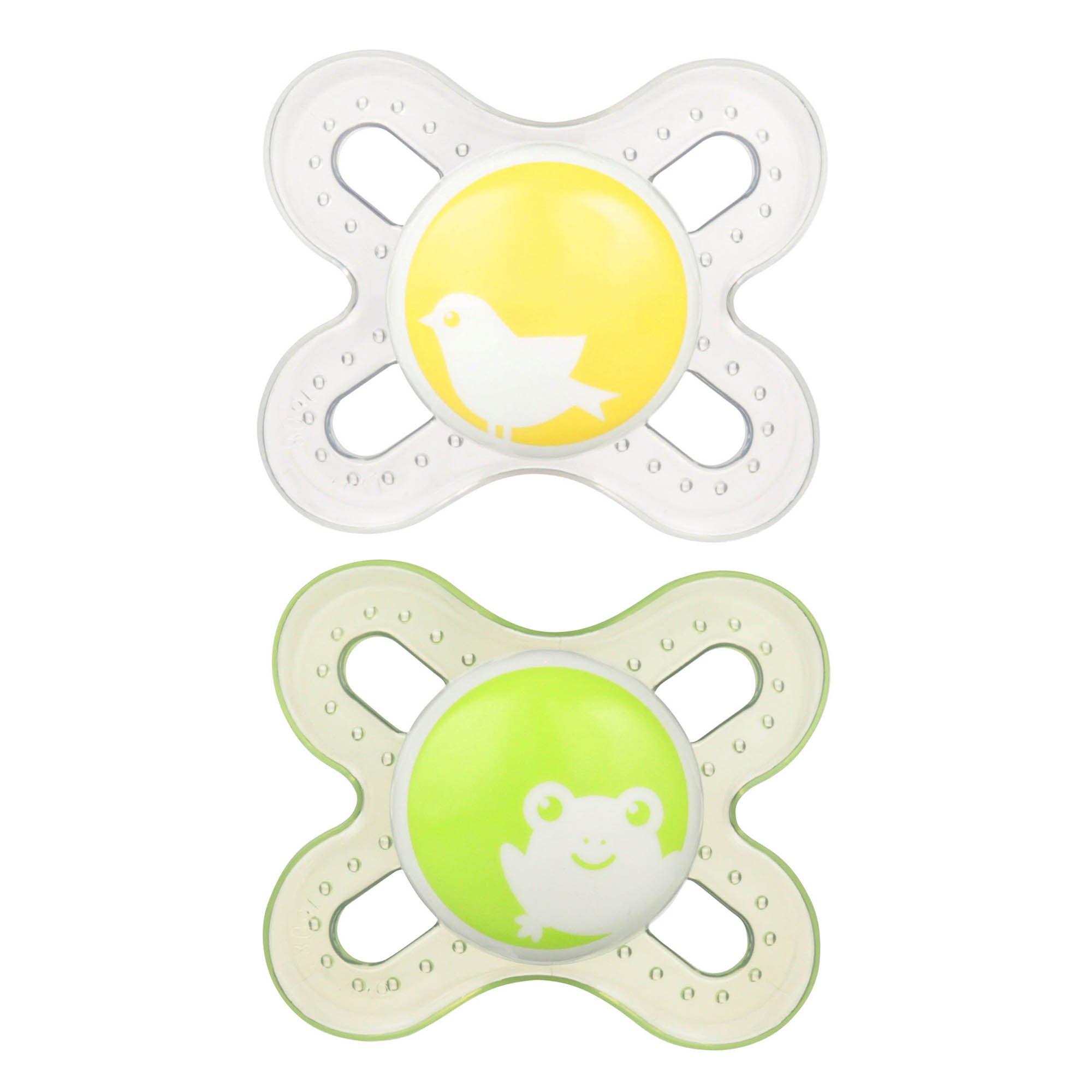
When I was pregnant, I was told that the best pacifiers were the Avent Soothie ones (or the Gumdrop binkies). This proved to be true later on when my baby was bigger, but she physically couldn't suck on them for probably 3-4 months.  I finally found the MAM newborn binkies and she loved those.  Later on she preferred the other ones, but I wish I would've had the MAM ones from the get go because she doesn't like binkies very much because we just didn't use them the first few months because they were too big.  So research your binkies and get a few different brands, just in case!

Image result for different brands of binkies


Get the same brand and style of bottles

As new parents, we had some Phillips Avent bottles, a couple of specialty bottles from another company that helped to prevent colic, and a couple of random ones we got when we forgot bottles and had to pick up a couple from the store.   This can get annoying when you're scrambling for bottles when baby is upset and one lid doesn't fit one bottle and so on.  We ended up deciding to just keep the Phillips Avent bottles because they were the simplest, cheapest, and worked really well.  

Image result for philips avent bottles

Newborn clothes are different sizes!
When I was preparing for baby, I got clothes in the newborn size.  Right, because they're a newborn.  WRONG.   Some newborn outfits are short and wide and some are long and skinny.  It's impossible to predict exactly how your baby will fit into these clothes, but you can get a rough idea if your baby is going to be small or big.  I just didn't even think about it and in my case, my baby was very small, which I knew she was going to be.  Because of my lack of planning, about 3 or 4 of her onesies actually fit her.  I ended up having to go shopping a few days after I had her to stock up on onesies her size.  I kept the other ones just in case and she ended up never fitting into them because they were short and wide and by the time she was wide enough to fit in them, she was too long.  So, even though they say newborn, they're all different sizes!

Related image

Research common health issues with newborns 
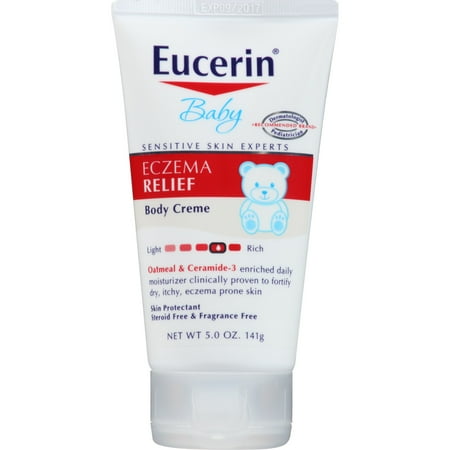
The reason I italicized 'common' was becuase you don't want to freak yourself out but it's good to know the most common things that people run into.  I didn't know that Eczema in babies was a thing at all until my baby started breaking out in bumps and I didn't know what to do.  It wasn't a huge deal, I did some research, called her doctor, and ran to the store for some supplies but it would've been nice to have some of those supplies already.  With Eczema specifically, you put moisturizing cream and aquafor on their skin to manage the breakouts and I would've liked to have had both of those on hand even before I found out she had Eczema because you can use both of those for other things too.  Sometimes it's good to be prepared!

Eucerin Baby Eczema Relief Body Creme 5.0 oz.


Get the diapers with the diaper wetness indicator
These diapers are awesome!  We just happened to get Pampers and that's how we found out about this, but I think Snuggies diapers might be the same way.  Regardless, these diapers have a line down the front middle of the diaper that is yellow and when the baby pees, it turns blue.  The more they pee, the more the line will show blue instead of yellow.  This is an easy way to see when it's time to change their diaper, because with a newborn, sometimes it's hard to tell, because they don't pee that much.
Image result for diaper wetness indicator


Know and understand postpartum depression beforehand.  Even if you don't suffer from it later


So, we all (hopefully) know the basics of postpartum depression that they quickly go over with you at  the hospital.  But at least for me, I didn't understand it fully and didn't know everything it entailed.  When I realized I was dealing with postpartum depression (and a little postpartum OCD), I did my research online, because that's what I do when I want to get in front of something before it railroads me.  I was lucky enough to find exactly what I was looking for online and was able to find some coping tips and tricks as well as how to treat postpartum based on MY symptoms (I say it like that because some of the symptoms they list may not may not apply to you).  I found journal guides for doing Cognitive Behavioral Therapy, which is basically re-labeling your thoughts and calling them what they are instead of internalizing them and beating yourself up for having them.  Understanding that the thoughts that enter your mind randomly are not your fault and you're not doing it on purpose. They are simply noise and should be looked at as such.  What I wish I knew beforehand was that the thoughts that enter your mind can be pretty scary and can make you feel like you're betraying yourself and your beliefs and everything you know by having them.  It absolutely kills your self esteem and it took me a while to fully trust myself again because I felt like my mind was betraying me.  If I had understood and had been mentally prepared for this in advance when my hormones were not completely out of whack, I don't think I would've dipped as much as I did and had such a hard time getting back to normal.  I also want to go over Postpartum OCD because I had definitely never heard of this before I started feeling some of the symptoms of this.  Postpartum OCD is basically OCD that is taking place due to you having your baby.  You don't have to have previously had OCD to suffer from postpartum OCD.  What the main symptom of this is is having repetitive thoughts come into your mind or have repetitive worries that MAY or MAY NOT develop into compulsive actions.  I want to emphasize this because a couple of counselors I went to said that I 100% didn't have postpartum OCD because I was only having intrusive thoughts I would obsess over (and by obsess I mean they were on a loop and I couldn't stop thinking about them, worrying about them, beating myself up for having them) and I didn't have any physical compulsive actions.  Looking into it further, I found that part of the actual definition of OCD is that obsessing over your thoughts is considered a compulsive action.  Also, telling yourself "No, This is bad, i'm going to think about something else" over and over each time is a compulsive action.  I finally found a counselor that agreed with that and help me treat both.  The other counselors said, "Well, why does it matter if you have that or not?"  The reason is that for someone who is going through something new and scary, for some people it helps to put a name on it, know that it's an actual thing that other people deal with, and find coping techniques for that specific thing.  So, know what to keep an eye out for after having your baby, know that there are many different symptoms so even if you don't meet the criteria you've heard about, look it up! Research the tips people have to avoid dealing with this at all (exercise, sunlight, meditation, a support system, etc), and know that if you have a history with an anxiety disorder, you are more likely to deal with postpartum depression/anxiety in some form.  I didn't know this at all until I was in the thick of it.  Knowledge is power!


Sunday, April 29, 2018

Why I Recommend Counseling To Everyone

Image result for clearing in the woods


If there's one thing I'm really passionate about, it's that counseling should be a way of life.  I think that there is nothing more healthy than counseling on a consistent basis.  I remember when my husband mentioned that someone he knows goes to marriage counseling with his wife.  This was very early in our marriage and I kind of panicked because, in society, the only time people ever talk about going to marriage counseling it was a hail Mary attempt to avoid divorce.  But the older I've gotten and the longer I've been married, I've learned that marriage counseling is awesome!  I would love to get rid of the stigma around counseling and therapy.  It makes me so sad when people I know and love do not go to counseling (when they could really benefit from it) because they are embarrassed.  So to all of the skeptics out there, here are my reasons why I love counseling and why I would recommend it to everyone. 


1.  Someone is being paid to listen to you. 
It's a hard truth to swallow, but the fact is, your family and friends can only be so invested in your problems.  They can listen and be sympathetic, but they have their own problems to worry about.  I like to have people's full attention when I'm talking about something serious with someone.  When you go to a counselor, you have their undivided attention for an hour.  They are looking at you (unless you don't want them to), they are actively thinking about what you are saying and trying to understand, and they do not make assessments about what you're telling them.  And you never have to feel bad about dumping your problems on someone, because they're getting paid for it!  It's a win-win!

2.  A Third Party Perspective
Sometimes when you're so close to something because, you know, it's your life, it's hard to see the big picture.  Some people in your life may sugar coat things to spare your feelings.  Other people might be a little too harsh and abrasive when you talk to them.  A counselor is the perfect in between person.  They will be very kind and understanding and help guide you to find the answers in a non-threatening way.  And the reason it's so non threatening is because they aren't judging you for your actions, they are helping you to see what is healthy and what is unhealthy from a mental health standpoint.  It's not their own opinion.

3.  You Learn Tools To Help You Solve Your Own Dilemmas
Counselors aren't just there to listen, they also help you to be able to help yourself.  One thing that I love is that counselors are focused on goals and helping you to get to where you want to be.  If you want to overcome a habit, move past an issue, etc, they will give you ideas on how to cope and how to help yourself when you're not in their office.  They aren't conditioning you to be dependent on them, they encourage you to help yourself where you feel you can.  Practicing this also trains you to rely on yourself and boosts your confidence in your abilities. 

4.  It Just Feels Good To Let Everything Out
No filters, no worry about hurting feelings, you're talking to someone who doesn't know anyone in your life. You can talk about anything and everything and it will never get back to anyone.  You can talk about things you've never told anyone or will never tell anyone.  You can talk about things that bother you that you've always felt were stupid and not worth bringing up.  It is your time and space to talk about whatever you want.  

In conclusion, I think counseling is such a healthy thing to do on a consistent basis.  That might sound daunting, but you don't have think of it that way.  Think of it as a nice comfy pillow that's there for you when you need it.  Okay, weird comparison but I love fluffy pillows.  Also, once you overcome one thing, something else usually comes up.  That's life.  And that listening ear and perspective can help you yet again.  In my opinion, seeing a counselor is in the top 3 healthiest things for your mental health.  No matter who you are.  


Friday, April 6, 2018

How To Avoid Disconnection and How to Re-Connect With Yourself

Related image


It's been a while.  I wanted to talk about something that really affected me when I was 18.  Back then I was living with my friend, working, and doing fun things.  But at some point, well, when someone suggested it to me, I realized that I was feeling detached.  Not necessarily from other people, but from myself.  I remember what it felt like.  It felt like when my head wanted to do something, it didn't consult my body or my heart, and when my heart wanted to do something, it didn't consult with the other two.  I found myself not really tied to anything.  I didn't quite know what I wanted in life, how to get anywhere in life, and I was just floating around going from thing to thing.  I remember that things would happen to me that should've upset me or made me really happy but my emotions only went so deep.  I didn't feel complete joy or complete pain.  It was like one of those pictures that can be two things.  Once you see it, you can't unsee it.  And once I saw it, I tried to figure out how I got there.  I wasn't like that in High School, I had never really been like that before.  So, after some soul searching and some time away from my everyday life, I figured it out.  And I wanted to finally share my tips for avoiding becoming detached from yourself.  If you've experienced this and have any more to add, please comment below. 

1.  Figure Out What Is Important To You
This may sound easy, but to someone who has been living on the surface for so long, it can be hard to dive deep into what really grounds you.  What are your morals?  What are your boundaries?  Who and what in the world is most important to you?  What do you believe your purpose is?  Scary questions, yes,  but what's even scarier is not having the answers.  Once you take control of what you believe, who you are, and where you're going, you'll feel so much more free and less terrified.  Because even if your conscious doesn't feel terrified, your subconscious is a frightened child balled up in the corner, and your subconscious will still affect your conscious mind. 

2.  Make Yourself Have Intentional Thoughts
I noticed that my thoughts were fleeting and were only about things that were happening right then.  And a lot of the times I wasn't even aware that I was thinking.  Now, there's a balance, because you don't want to always be in your head and not be in the present moment.  But you also want to be able to process what's happening in the moment and actually think about what you're saying and what you're doing before you say/do it.  The more you make yourself think about things, the more you connect your mind with your body and they eventually become congruent.  So when I talked about doing things without really thinking them through or really consulting myself about it, this helps with that. 

3.  Hold Yourself Accountable
HUGE.  A lot of times when you're feeling detached, it's easy to intentionally or unintentionally let yourself off the hook for things.  For example, feeling bad about something you said that you shouldn't have said, or feeling bad about treating someone badly.  That part is important because it helps you to develop a trust within yourself that if you screw up, you'll kick yourself in the butt and not do it again.  It's one thing to have other people scold you when you've done something wrong, but when it's you keeping yourself in check, you're connecting your mind, body, heart, and any other piece that seems disconnected. 

4.  Make Yourself Get Excited About Things!
Find things to get excited about.  Plan, dream, wish, anything that requires some thinking and some passion, do it!  This will help you to enjoy the good things in life!  It goes both ways, feeling detached keeps you from feeling pain but it also keeps you from feeling excitement and joy.  Plan a vacation or a mini vacation and just soak it all in. 

5.  Think Of What You're Thankful For
This helps to humble you and really make you think about what and who you're lucky to have in your life.  This will help you to see the good in everything and encourages your mind to actively think of happy things.  It also makes you really evaluate your life and your priorities.  Evaluation is one of the biggest helps when it comes to feeling connected.  It's all about deciding to try and trying to change.  Detachment can lead to apathy, and that is far more lonely road. 

To end on a high note, it doesn't have to take long!  Again, once you see it, you can't unsee it.  So when you see it, you have to decide that you want to change in order to change, it won't happen for you.  It changed for me in a matter of months, and I honestly have to really think about it to remember how it was back then because it's so foreign to me now.  I got through it and started living life, not making it by, not surviving, but actually living.  Intentionally. 

Tuesday, November 7, 2017

Leadership Skills I Had To Learn The Hard Way

Related image


             My first promotion was at a survey company I had worked at for a few months.  There was a supervisor position available and I decided to go for it.  When I found out that I got the position, I was elated.  I felt like I was going to be doing important things and helping others and the slight pay raise didn't hurt either.  On the surface it seemed like I was going for the position for all the right reasons.  I wanted to help people, I wanted to make a difference (which usually required more power), I wanted to have a little bit more freedom and I wanted a little bit more money.  A few years ago I would've said that those are perfectly good reasons for wanting to be in management, but I learned the hard way that my reasons were not that great and my views were a little skewed.  When I say "The hard way" it wasn't that bad, I still tried my best and made it through, but I definitely could've made it easier on myself and the teams I've been a part of if I would've learned sooner.  So here are the most important lessons I've learned about leadership, taking the long way around.

[In no particular order]


1.  It is NOT about you.  It is about your team.  

            This sounds very conceited, and in a way it is.  Have you ever had a boss that was constantly defending their actions, wanting the last word, never admitting fault?  Well, that was me.  Or at least I felt like that was me.  It was very, very hard for me to be okay with the fact that I didn't know something.  I always wanted to seem like I was the most knowledgeable person around.  Now, there can be a few reasons why people have those ever-so-lovely qualities, including greed, insecurities, etc.  Mine stemmed from the insecurities.  And honestly, that is what was so hard about changing my perspective.  I knew myself and I knew that I would never be influenced by power and greed.  And because I really did want to make a difference and help people, I thought my intentions were good and that the problem lie somewhere else.  But that's the problem.  As a wise man I know once said "If you see others as the problem, that is the problem."  People don't usually intentionally make things hard for others.  Everyone usually has a reason or some logic behind their actions.  But even if they did, you still have power over yourself.  You can control how you respond, how you think, and, yes, even how you feel about things that are in, and out of your control.  I know, it may not seem like it.  But trust me, it's the truth.  The sooner you find a way to dig deep and gain control of yourself and anchor yourself to your own moral compass, the sooner things will start to improve.  The reason I was so scared to be wrong and scared to let my guard down, was that in the past, as soon as I did that and allowed myself to let my guard down with people at work, people took advantage of me.  This is very important:  It is okay to let your guard down.  The important thing is finding a balance.  You can't be buddy buddy with everyone, but you can still have some fun people and cultivate a hard-working, but relaxed atmosphere.  Don't ask me how to master the last part, because I have no idea.  But I've seen it done so I know it is possible, and more importantly, that is the way it should be.  The moment I (very relunctantly) let my guard down, everything went so much smoother.  People didn't feel like they were walking on eggshells.  I felt more united with my team and hopeful about the future.  And I didn't have to be pretend to be something I wasn't.  The second part of this is that being a leader is NOT about the leader.  The leader should not be at the front of the group barking marching orders and texting on their phone.  The leader should be thoughtfully observing the group, helping others to realize their own potential and to shoot for the stars themselves.  They should be a positive influence who encourages, instead of intimidating, inspires, instead of demanding and pushing.  A leader leads, they do not "manage" (which makes people sound like chess pieces), they do not degrade or diminish them or the attributes that they bring to the table.  I heard a quote once that said something like "The responsibility of leaders is to make more leaders".  Well, that quote was hard for me to hear for a long time because I didn't want to train people to take my job.  Wrong.  Not about you.  That quote makes all the sense in the world to me now.  Leadership is working for others, serving others, with the mindset of actually helping them learn and grow and reach their full potential.  That is the greatest joy of a leader.  The money, the status, the perks, the power, squat.

2.  It is okay not to know everything. In fact, it's good. 

                 I thought about the managers I had and I hated when I would ask questions and they didn't know the answer.  So I tried SO hard to always have the answer for everything.  I thought, that is what a great leader is, right?  All knowing?  Ha.  But then I remembered that those leaders I struggled with, it's not that they didn't have the answer, it's that they didn't do anything about the fact that they didn't have the answer.  People respect a leader that cares enough about helping that they admit they don't have the best answer, but actually find it for you so that you both know.  Even better than finding out the answer for them, if possible, find it together so that you both know how to do it.  Not because you don't want them to ask you in the future, but so that they can grow and be able to find things easier and be able to spend more time helping customers.  In the end, people don't respond to machines and they don't respect machines, so act like a human.


3.    Don't assume.  Communicate Clearly.  

             I lumped these two together because they often go hand in hand.  My approach was to be the kind of manager I would want.  I like having a manager that tells me what to do and then leaves me alone so I can do it.  I assumed everyone was like this.  I also assumed that I was communicating direction clearly because I was saying things in a way I would understand.  But, as we all know, we don't all communicate and understand the same way.  The key is to communicate how the other person needs to hear it in order to understand.  The part of this is that you can't assume people will do something because it makes sense to you.  I assumed that my team knew all of the recent system changes because we went over it in a group huddle briefly.  And I assumed that anyone who wasn't in the huddle understand the changes because of the email sent out about what was covered in the huddle.  What I didn't think about was that the more critical updates required extra emphasis and a longer conversation because we had team huddles daily and the information tended to get overwhelming.  I also assumed that everyone on my team wanted to move up in the company, like I did.  I tried to cultivate an environment that helped them reach their potential and grow in their skills.  While I think in some ways I did, in other ways, there was a lot of unnecessary pressure put on my team.  I've learned since that some people just want a safe, nice place to come to work, make their money, and continue on with their lives.  For me, work has always been a huge part of my life and a means to an important career so I didn't understand that.  Once I had my daughter, I understood the feeling of wanting to put in my time and leave.  Don't assume that everyone thinks, feels, or communicates the way that you do.  It takes a little more effort, but in the end, adjusting your communication style to match someone else's goes a long way in getting things done and allowing things to run smoothly. 

              There are so many attributes that leaders need to learn, goodness knows I'm still learning.  But these were my top three I've learned the hard way.  I don't naturally do well at these three things, but now that I know what I need to improve on, I can work on them little by little.  Even if you're not good at something and have to really work at it, it's still possible and always worth it!  I hope this helps someone feeling stuck in a managerial role who wants to become a better leader.   Please share what your top lessons are that you've learned.  I'd love to hear them!

Saturday, October 14, 2017

When The Gospel Teachings Became Delicious to Me


I was raised in a very religious household.  I went to church every Sunday, served in numerous church callings, and often shared my love for my religion with others.  But as many young people do, I had to venture out into the world and develop my own testimony and knowledge of myself, life, and my religion.  I ended up taking a path filled with great things such as self-help books, seminars, inspirational music, Ted talks, and more.  My bookshelf became full of anxiety hack books, books about understanding yourself and others, personality charts and ways to improve communication.  I love learning and so I loved all of my books.  I also found a great love for music.  Hearing songs with beautiful and breathtaking melodies that are so perfect, reading lyrics that are so inspirational and profound, that was one of my first loves.  At different places I've worked I got into different kinds of books.  While working for one company I became very interested in financial books and I dug into financial wisdom from the best and brightest, Robert Kiyosaki, Dave Ramsey, etc.  I wanted to learn about managing risk and stocks and mutual funds.  The next company I worked at I read all about leaders and how to be a great leader and how to understand people who are different from you so that you can be an effective team (I just watched Oblivion).  I had learned so much from these books and talks and I am so grateful for them and how they gotten me this far.  I've relied on them heavily and made them my go-to for inspiration, knowledge, and wisdom.

        In the past I've been wishy washy about where I stand and have had some times when I just wasn't in the mood to be religious, for lack of a better phrase.  That was the truth.  My weakness was laziness.  I knew I believed everything that my religion taught and I knew that I wanted to become like God who sees others as precious children of God and lives to serve others.  That, to me, is the perfect religion.  But I often fell (and obviously still fall) short of who I needed to be.  Some days I didn't go to church and I didn't really think much of it.  I sometimes viewed my callings as a hassle and felt like people were too outgoing for me and it just made me uncomfortable.  I also felt like I didn't belong in the cookie cutter mold that I saw others fall so perfectly into.  So that's where I was.  Then something funny happened.

        My dad and I went on a walk one day and he asked me how I was doing with the church and how I was feeling.  I told him that I had a hard time turning to God for answers, peace, and inspiration unless I've exhausted all of my other options.  I told him that I've grown so used to just figuring it out on my own and doing research and finding the answers I need that I don't often think to pray or fast for help.  What he said was very interesting.  He didn't lecture me about being worldly and materialistic about my books and talks and music.  He didn't tell me that to be the person I need to be I need to pick religion and drop that other stuff.  He said that it was great that I found something that helped me for so long.  There are so many good things in the world that are very good and helpful and created to help us.  But the world needs people who have both.  The world needs people who are book smart and spiritually wise.  Both are important and both will help you to be who you need to be.   That really stuck with me.  Not long after that I got pregnant with my daughter.

        All through my pregnancy I read pregnancy book after pregnancy book, blog posts and youtube videos about how to ease anxiety and how to get through labor and how to prepare for postpartum and how to stay sane when you're home all day with the baby.  I listened to my favorite music to calm me and to get me by.  Well, I had my baby and everything was great.   The labor went fine, I recovered quickly, I went back to work, I was able to breastfeed, things were going all right.  Then, around three months after I had my baby, I started exhibiting signs of postpartum OCD.  I had intrusive thoughts enter my mind that I couldn't get rid of and they were very troublesome and gave me a lot of anxiety.  I was constantly in fear and nervous to be alone.  It was an awful feeling.  My doctor recommended that we move in with my parents for a couple of weeks until my medication started working for the support.  I was embarrassed, ashamed, and felt like a failure or a freak.

I went to see a counselor and spoke with a few doctors, including my primary care doctor and they were very helpful.  They gave me very logical and practical tips to deal with the OCD and to manage my anxiety.  As I did in most stressful situations, I turned to music, youtube videos, and self help guides to feel better.  I found a little bit of comfort but they mostly just made me more anxious.  The thoughts wouldn't go away and I didn't know what to do.  Desperate, I started to pray and read my scriptures.  When I read my scriptures, the thoughts went away, or at least were easily manageable.  I felt like I knew myself and I could think clearly as I read.  I began to read more and pray more and as I did, I felt comfort and love.  I started to read a book about becoming spiritually centered and it has been like a wonderful dessert to me.  I've been listening to conference talk after conference talk, devouring every word that is said, even if it doesn't directly pertain to my current predicament.

      I'm so interested in the stories in the scriptures and understanding what happened.  I'm finding role models and hope from the amazing prophets and apostles who I read about.   I'm learning from the book about being spiritually centered to do things out of love for Heavenly Father instead of for my own glory.  I thought I knew myself so well and that I could control everything in me, but I've had to humble myself and realize that God knows everything and has a plan for everything, and my plan isn't always his plan.  He wants me to go through things that I would never wish upon anyone because they will make me stronger.  I am not the reason for my successes or my wisdom or my knowledge.  Heavenly Father has placed those things in my life to help me in the way that I needed to be helped at the time, but I had nothing to do with it.  I've had to completely trust in Him and have faith that everything will be okay if I keep working and trying to progress.  It's a scary feeling sometimes, because when you get to trust yourself so much and think the you can just handle anything, you get thrown curveballs and it rocks your world.

I am so grateful for the opportunity I've been given to see things differently, to see the gospel, and the doctrine, and the teachings as delicious treats that I can devour at any time.  I love that there are conference talks on youtube and so many other resources at my fingertips.  Those other things will always be important to me, and I do believe they are super helpful in managing life situations and becoming a better person.  But, in my recent experience, nothing, NOTHING, has made me feel as loved, as comforted, and as strong as I feel when I'm learning more about the Savior, the church, and the doctrine.

Since I've been doing this, I've started to see others differently.  I'm starting to see others who used to overwhelm me with their outgoing-ness as kind and sweet people and I appreciate them more.  I'm starting to see my friends and family as my tribe in a way I never have before.  My heart is so full from people close to me who have been there for me, listened to me, and cried with me.  Everything is changing.  I wanted to share this experience specifically for people who are like me.  I've been on both sides, I've doubted, I've slacked off, I've sprinted in the opposite direction for years and it turned out okay.  But I had no idea, no idea what I was missing.